
APPLICATION ENGINEERING · JEWELRY CASTING
Silicone for Jewelry Mold Making & Wax Injection
RTV-2 silicone systems selected for the master, mold-cutting method, wax injection process, and required production life—not simply by hardness.
- Fine engraving and stone-setting detail
- Controlled flexibility through cut lines
- Stable wax patterns across repeat cycles
FACTORY APPLICATION SUPPORT
Get a grade recommendation
Share the master material, mold size, undercuts, wax temperature, cycle target, and preferred cure system. We will recommend a test grade and processing window.
SYSTEMS
Tin / Platinum
FORMAT
Pourable RTV-2
SUPPLY
Factory direct
What you receive: grade direction · sample plan · TDS support
THE PRODUCTION REALITY
A Jewelry Mold Is a Manufacturing Tool
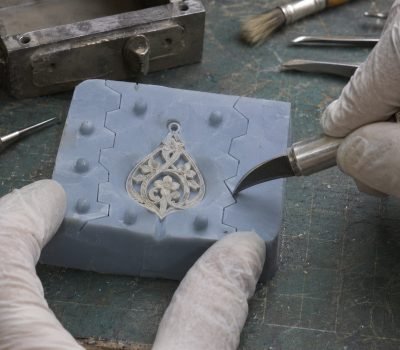
A jewelry mold is judged by the wax patterns it produces. If engraving softens, prongs distort, cut lines tear, or the mold shifts under injection pressure, every downstream step becomes slower and more expensive.
CREKEM selects the silicone around the master material, detail level, cutting method, wax temperature and pressure, required mold life, and workshop process—not by hardness alone.
SELECT BY MOLD BEHAVIOR
The Softest Rubber Is Not Always the Best Rubber
Jewelry makers often ask for the softest silicone because it feels easier to cut and open. But a mold that is too soft may flex under injection pressure, lose registration, flash at the seam, or distort delicate prongs. The correct grade balances:
- Sharp reproduction of engraving, pavé seats, prongs, lettering, and filigree
- Tear resistance through cut lines, vents, and thin sections
- Enough mold body to resist shifting and wax flash under injection pressure
- Clean release without stretching or distorting the wax pattern
- Low shrinkage and stable dimensions through the required production cycles
MILKY TRANSLUCENT
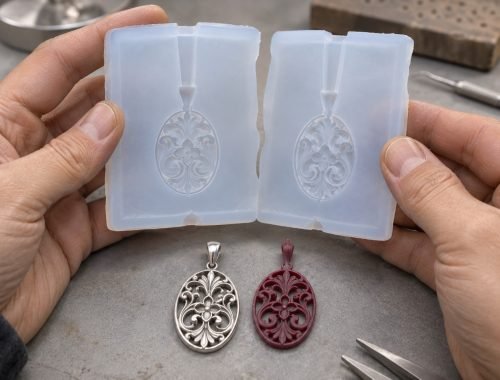
Easy Detail Reading, Practical Workshop Handling
A pale translucent mold makes cut lines, cavities, and trapped air easier to inspect while still giving good visual contrast around the jewelry master. It is a popular practical choice for daily mold cutting and wax injection.
WATER-CLEAR
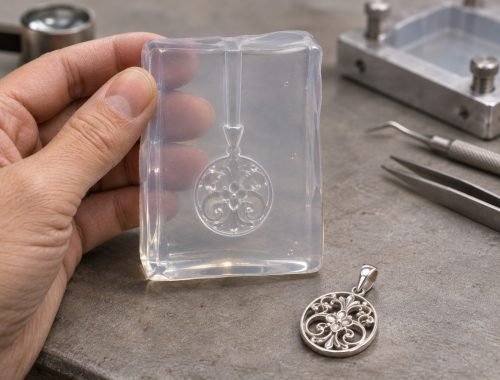
See the Master, Sprue, and Air Path Before Cutting
Clear silicone allows technicians to inspect master position, sprue direction, bubbles, and internal geometry through the mold. Choose it when visual inspection is important, while confirming the required hardness, tear strength, and cure compatibility.
COMMON JEWELRY MOLD PROBLEMS
What Goes Wrong in Jewelry Mold Production?
Small mold defects quickly become production costs. Lost detail, torn cut lines, and unstable wax patterns lead to rework, rejected castings, longer finishing time, and a higher cost per piece.
Fine Detail Is Soft or Missing
Use suitable viscosity, low shrinkage, good surface wetting, and correct air control to protect engraving, stone seats, sharp edges, and small lettering.
Cut Lines Tear Too Early
Match tear strength and flexibility to deep undercuts, vents, complex seams, and the number of times the mold must be opened in production.
Wax Patterns Flash or Distort
Use enough mold body, accurate keys, stable cut surfaces, and controlled wax temperature, pressure, and clamping to prevent seam flash and dimensional drift.
PRODUCTION WORKFLOW
Master to Repeatable Wax Pattern
Validate the silicone, master preparation, cutting plan, and wax injection settings together before moving into repeat production.
01 — REVIEW THE MASTER
Identify the master material, detail level, undercuts, fragility, surface finish, and possible cure inhibition.
02 — DESIGN THE MOLD
Plan the frame, sprue, gates, vents, seam, keys, mold thickness, and intended cutting or parting method.
03 — MIX, POUR & CURE
Measure accurately, mix completely, control entrapped air, pour in a thin stream, and cure under controlled conditions.
04 — CUT, INJECT & VERIFY
Cut deliberately, test wax temperature and pressure, inspect the pattern, then lock the production settings.
JEWELRY MOLD FAQ
Common Jewelry Mold Problems
Wax defects can come from material selection, mold design, cutting, or injection settings. Start with the symptom.
Both can reproduce fine detail. Translucent silicone offers good visual contrast and practical handling for routine cutting. Clear silicone makes it easier to see master position, sprues, bubbles, and internal geometry. Final selection should also consider hardness, tear strength, shrinkage, cure behavior, and production life.
Some uncured resins, sulfur-containing materials, amines, tin residues, latex, and surface contaminants can inhibit platinum cure. Fully wash and post-cure the print, apply a proven compatible sealer if required, and run a small spot test before making the full mold.
Check whether the silicone fully wetted the master, whether air was trapped in fine recesses, and whether the mold cavity is clean and fully cured. Also review sprue and vent design, wax temperature, injection pressure, and mold temperature.
Thin cut zones, sharp internal corners, deep undercuts, poor seam placement, aggressive opening, or insufficient tear strength can concentrate stress. A slightly stronger grade and a better cutting path often improve mold life.
The mold may be too soft, poorly keyed, inaccurately cut, insufficiently clamped, or injected at excessive pressure. Check mold registration, mold body, clamping, wax temperature, and injection pressure as one system.
Send the master material, part dimensions, photographs, detail and undercut level, mold-cutting method, preferred color or clarity, wax temperature and pressure, target mold life, working time, cure time, and required order quantity.
FASTER GRADE MATCHING
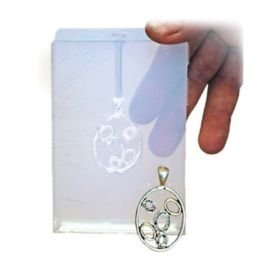
Send the Master, Mold, and Production Details
A useful recommendation starts with the actual master and injection conditions. Send clear photos plus the details below so CREKEM can narrow the cure system, hardness, tear strength, viscosity, working time, and color or clarity.
- Master material: metal, wax, resin print, clay, or existing jewelry
- Part size, detail level, undercuts, and surface finish
- Cut mold, two-part mold, or impression method
- Wax type, injection temperature, and injection pressure
- Expected number of wax patterns or production cycles
- Preferred working time, cure time, color, packaging, and order volume
TALK TO A MATERIAL SPECIALIST
Turn Fine Masters into Reliable Production Molds
Tell us what you are molding, how the mold will be cut, your wax injection conditions, preferred translucent or clear appearance, and required production life. CREKEM will recommend a suitable RTV-2 silicone and sample direction.