

APPLICATION ENGINEERING · CONCRETE & CAST STONE
Silicone and Polyurethane Rubber for Concrete & Stone Molds
Choose mold-making rubber for concrete and cast stone based on part geometry, surface detail, production cycles, and demolding needs.
- Fine texture and edge reproduction
- Tear resistance at undercuts and relief
- Pourable and brushable options for different mold designs
MATERIALS
Silicone / PU
Compare chemistry by process
METHOD
Pour / Brush
Match the mold geometry
VALIDATION
Sample / TDS
Confirm before production
SUPPLY
Factory direct
Repeatable bulk support
PROJECT INPUTS
Six Inputs Define the Starting Grade
Concrete mold rubber should be selected around the complete production setup—not a single hardness number.
Size and unsupported area
Relief depth and demolding path
Concrete mix and abrasion
Pour-on or brush-on
Mother mold and handling method
Cycles and cost per casting

COMMON PRODUCTION CHALLENGES
Where Concrete Molds Lose Time and Consistency
These symptoms often point to a mismatch between rubber properties, mold geometry, support design, and production conditions—not hardness alone.
01
Early Edge Tearing
Thin edges and detailed areas begin to tear during repeated demolding.
02
Mold Distortion
The mold stretches, sags, or becomes difficult to position consistently.
03
Short Production Life
Surface wear and repeated flexing reduce usable mold cycles.
04
Incomplete Surface Detail
Pinholes, trapped air, or poor flow affect texture reproduction.
CREKEM MATERIAL ROUTES
Match the Chemistry to the Production Requirement
Start with the mold and casting process, then validate the grade with a sample before production.
VERSATILE STARTING POINT
Tin-Cure Silicone
A versatile, cost-effective route for general concrete and stone mold making.
Best for: General molds, short runs, pourable or brushable applications.
Watch for: Allow for the selected grade’s specified shrinkage.
LOW-SHRINKAGE ROUTE
Platinum-Cure Silicone
A low-shrinkage route for molds requiring precision and dimensional consistency.
Best for: Detailed geometry and dimension-sensitive production.
Watch for: Confirm master and casting-material compatibility.
ABRASIVE PRODUCTION
Polyurethane Rubber
A strong-bodied route for abrasive concrete casting and repeat production.
Best for: Stone veneer, production molds, form liners, and repeated handling.
Watch for: Correct sealing, moisture control, and release preparation.
PROJECT-SPECIFIC SELECTION
Not Sure Which Route Fits Your Mold?
Share the mold size, master and casting materials, texture depth, application method, and expected production cycles. CREKEM will identify a practical starting route and grade for sample testing.
PRODUCTION APPLICATIONS
Four Common Mold Programs
Use the application to define the likely stress, then confirm the grade against the actual geometry and production target.

Stone Veneer & Cultured Stone
Multi-cavity molds face repeated flexing and abrasive concrete. Compare higher-body silicone with polyurethane when cycle life is the priority.
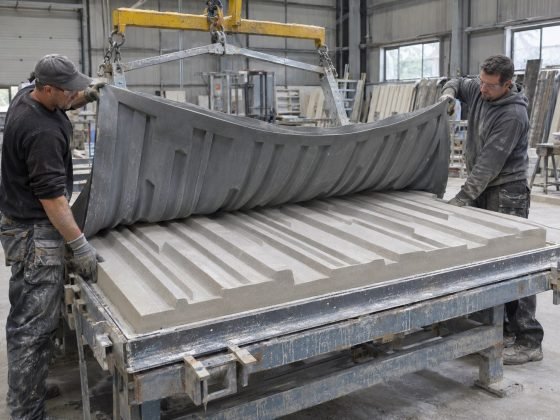
GRC / GFRC Architectural Panels
Large spans and relief require uniform mold thickness, a planned support shell, and enough mold body for handling.
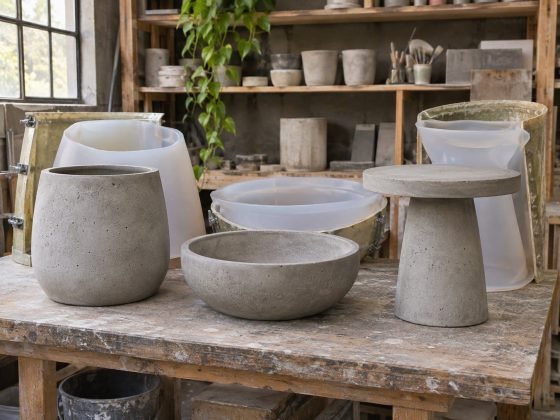
Planters, Furniture & Decorative Castings
Balance surface finish, demolding path, mold size, and practical workshop processing for custom or short-run work.

Texture Skins & Stamping Mats
Prioritize faithful texture, controlled flexibility, backing design, and durability under repeated site or factory handling.
FACTORY & VALIDATION SUPPORT
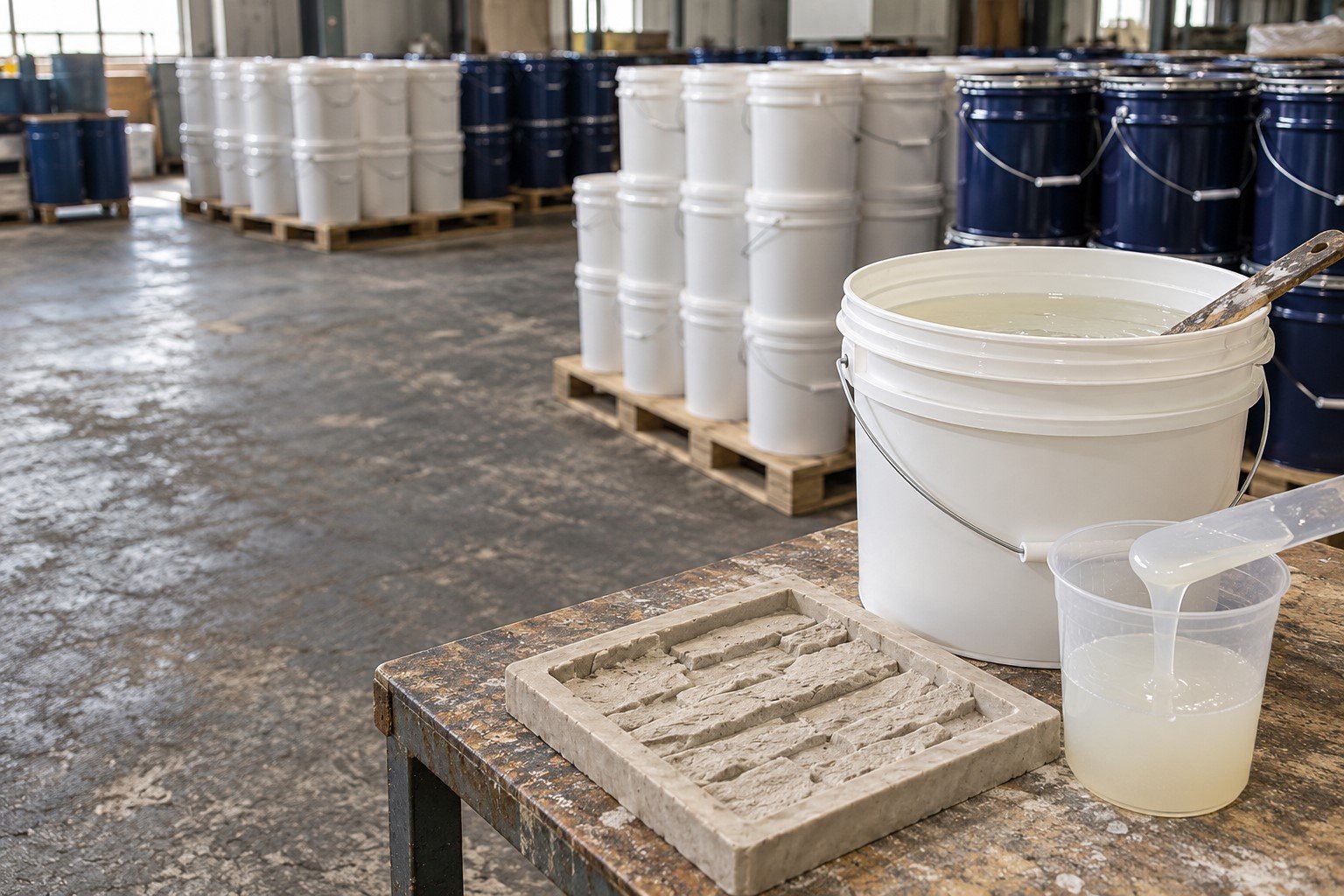
From Trial Grade to Repeatable Supply
CREKEM supports technical matching before bulk production so the approved material and process can be repeated more reliably.
- Grade direction based on mold and casting conditions
- Sample evaluation before bulk approval
- TDS, SDS, and batch documentation support
- Custom hardness, viscosity, color, and cure-window discussions
- Pourable and thixotropic formulation routes
- Packaging and OEM options subject to project validation
Confirm available packaging, MOQ, lead time, and customization terms with the sales team for the selected grade.
RELATED RESOURCES
Practical Guides for Better Mold Decisions
Use these guides to prepare the project, choose a starting material direction, and avoid common processing problems before sample testing.

MATERIAL SELECTION
How To Choose Liquid Silicone Rubber?
Compare pouring and brushing methods, then narrow the starting hardness by mold size, geometry, and support needs.
RTV-2 BASICS
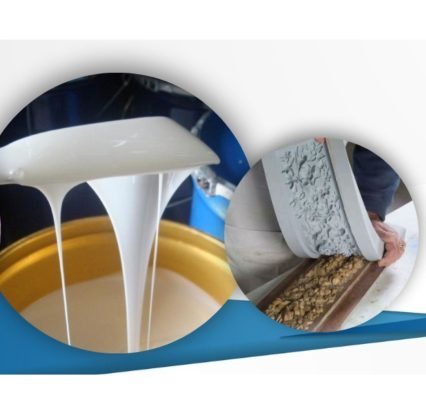
What Is RTV2 Silicone Rubber Used For?
Review where two-part room-temperature-curing silicone is used and why it suits detailed concrete and stone reproduction.

PROCESS CONTROL
How to Mix Silicone Rubber Without Bubbles
Use better preparation, mixing, degassing, and pouring practices to reduce trapped air and surface defects.
CONCRETE MOLD FAQ
Questions Before You Select a Grade
Use these answers as a starting point. Final selection should be confirmed against the actual mold geometry, materials, and production target.
There is no single best hardness. Deep textures and undercuts generally need more flexibility, while large molds require enough body to hold their shape. Mold size, support design, demolding difficulty, and expected production cycles should be considered together—not Shore hardness alone.
Silicone generally provides easier release and excellent detail reproduction. Polyurethane offers stronger abrasion resistance and mold body for repeated production. The better choice depends on mold geometry, concrete mix, production cycles, handling method, and cost per successful casting.
Large molds need enough body to maintain shape and sufficient tear strength for demolding. Supported pourable silicone, brushable silicone, or polyurethane may be suitable depending on mold span, texture depth, casting weight, and the support-shell design.
Porous masters such as concrete, plaster, stone, and wood normally require sealing. A compatible release agent may also be needed, especially for polyurethane molds. Always test the selected sealer and release agent first to confirm curing and surface-detail compatibility.
Please provide the mold dimensions, master and casting materials, texture depth, undercuts, application method, support structure, and expected casting cycles. Photos, drawings, required working time, and details of previous mold failures are also helpful.
TALK TO A MATERIAL SPECIALIST
Tell Us What You Need the Mold to Do
Share your mold dimensions, master and casting materials, texture depth, production method, and expected number of castings. CREKEM will recommend a suitable material family and grade for testing.