
Silicone Putty for Detailed Impressions & Small Molds
Two-part, platinum-cure silicone putty that you mix by hand and press directly onto a prepared master. Choose a softer grade for easier demolding or a firmer, faster grade for shape retention.
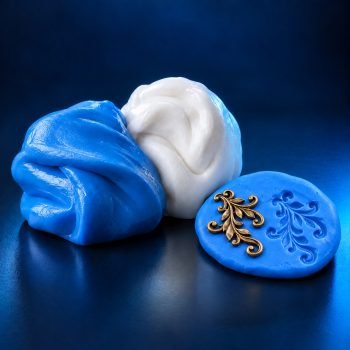
Timing values are typical at 25°C and depend on the grade and processing conditions.
Match Flexibility to Your Working Time
Compare hardness, available application time and the support your mold needs. These are selection starting points; validate the actual master and casting system.
PTS25
Shore A 25 ± 2
Fine details, delicate masters and easier demolding.
2–5 min working · 20–30 min demold
PTS35 / PTS40
Shore A 35 / 40 ± 2
Craft molds, selected resin molds and concrete details.
2–5 min working · 20–30 min demold
PTS50 / PTS60
Shore A 50 / 60 ± 2
Rigid impressions and applications requiring greater shape retention.
1–2 min working · 3–5 min demold
Five Grades. One Clear Comparison.
All grades use a 1:1 mix ratio by weight. Part A is white; Part B is blue or a custom color. Knead until the color is fully uniform with no streaks.
| Grade | Hardness Shore A | Working time min | Demold time min | Tensile strength MPa | Elongation at break % |
|---|---|---|---|---|---|
| PTS25 | 25 ± 2 | 2–5 | 20–30 | 3.0 | 320 |
| PTS35 | 35 ± 2 | 2–5 | 20–30 | 3.2 | 280 |
| PTS40 | 40 ± 2 | 2–5 | 20–30 | 3.5 | 260 |
| PTS50 | 50 ± 2 | 1–2 | 3–5 | 3.8 | 220 |
| PTS60 | 60 ± 2 | 1–2 | 3–5 | 3.9 | 180 |
Source: CREKEM TDS-PTSIL-01. Typical values are reference data, not specification limits. Mechanical specimens were cured for 24 hours at 25°C before testing unless otherwise stated. Temperature and mixed mass affect working and cure times. Demold time is not the mechanical-property test cure time.
Hand-Mixable Silicone Putty for Detailed Impressions
CREKEM silicone putty can be pressed onto a prepared object to capture small shapes, surface textures and localized details. Depending on the grade, the resulting molds may be used to cast wax, gypsum, concrete and selected resins. Check the product TDS and test your specific material combination before use.
Create flexible molds for jewelry, small ornaments and other decorative pieces with fine surface details.
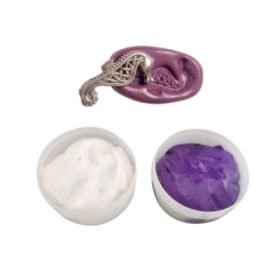
Hand-mixable silicone putty captures fine dental contours and surface details to form a detailed impression.
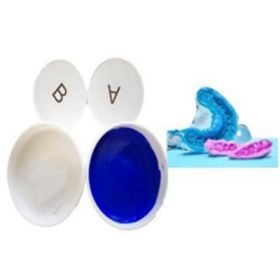
Soft, hand-mixable silicone putty captures the contours and fine details of the outer ear.
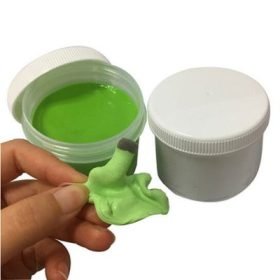
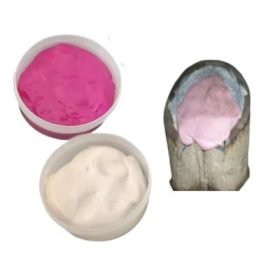
Silicone hoof putty conforms to the sole and frog to create a cushioned support pad.
From Two Parts to a Detailed Impression
Prepare everything before combining A and B. Use clean nitrile or vinyl gloves and keep both components free from contamination.
Prepare
Clean and dry the master, tools and surface. Seal porous surfaces where needed and run a small compatibility and cure test.
Weigh 1:1
Weigh equal amounts of A and B using separate clean tools. For a 100 g batch, use 50 g A + 50 g B.
Knead Uniformly
Fold and knead rapidly until the color is completely uniform. No streaks should remain. Apply immediately.
Press into Detail
Press a thin initial layer firmly into fine details to minimize trapped air. Add material for the required thickness and support.
Leave to Cure
Keep undisturbed for the grade-specific demold time. Allow for the effect of material temperature, ambient conditions and mixed mass.
Peel & Inspect
Demold carefully. Verify cure, dimensions and surface quality before using the mold or impression.
From Trial Sets to Larger Orders
Available set sizes
100 g · 200 g · 500 g · 1 kg · 5 kg · 20 kg
Custom packaging is available on request. Tell us your evaluation quantity, expected order volume and destination for a quotation.
Storage & shelf life
12 months from manufacture when unopened and stored as recommended. Keep original containers tightly closed below 25°C in a cool, dry place, protected from heat, sunlight, moisture and contamination.
Review the Material Before You Trial
Request the current technical data sheet and the Safety Data Sheets for both components. Include your intended use so we can discuss grade selection and any required documentation.
Read the SDS and product label before use. Wear suitable eye protection and non-latex gloves; maintain appropriate hygiene and ventilation.
Silicone Putty FAQs
Which grade should I choose?
Start with PTS25 for softer molds and easier demolding; PTS35 / PTS40 for general craft molds and concrete details; and PTS50 / PTS60 for firmer impressions with very short working times. Test the complete application before production.
Is the 1:1 ratio by weight or volume?
By weight. Use equal weights of A and B. Do not replace this with an estimated volume ratio.
How soon can I demold?
Typical demold time at 25°C is 20–30 minutes for PTS25 / PTS35 / PTS40 and 3–5 minutes for PTS50 / PTS60. Verify cure before demolding. The mechanical data were measured on specimens cured for 24 hours at 25°C.
Can I cast resin, wax, gypsum or concrete?
The TDS lists wax, gypsum, concrete and selected resins. Compatibility depends on the actual casting material and complete mold system; conduct a small-scale trial first.
Do I need a release agent?
Test the actual master, sealer, release agent and substrate. Seal porous surfaces when necessary. The supplied TDS does not establish a universal no-release-agent claim.
Is every grade food safe or suitable for dental use?
No blanket approval is established by the supplied TDS. Food-contact, professional dental, medical and prolonged skin-contact applications require an approved grade and supporting documentation. Contact CREKEM with the intended use and requirements.
Can I request a particular color or packaging?
The TDS lists white Part A and blue/custom Part B, with custom packaging available on request. Include your color and packaging requirements when requesting a quotation.
Tell Us What You Need to Reproduce
Share your application, master material and required working time. Request a grade recommendation, sample availability or a quotation for your planned quantity.
For a More Useful Recommendation
- Application and master / casting materials
- Hardness and working time requirements
- Mold size, details and demolding needs
- Trial quantity and expected order volume
- Packaging, destination and required documents