
APPLICATION ENGINEERING · PLASTER & GYPSUM
Silicone Rubber for Plaster Casting & Architectural Molds
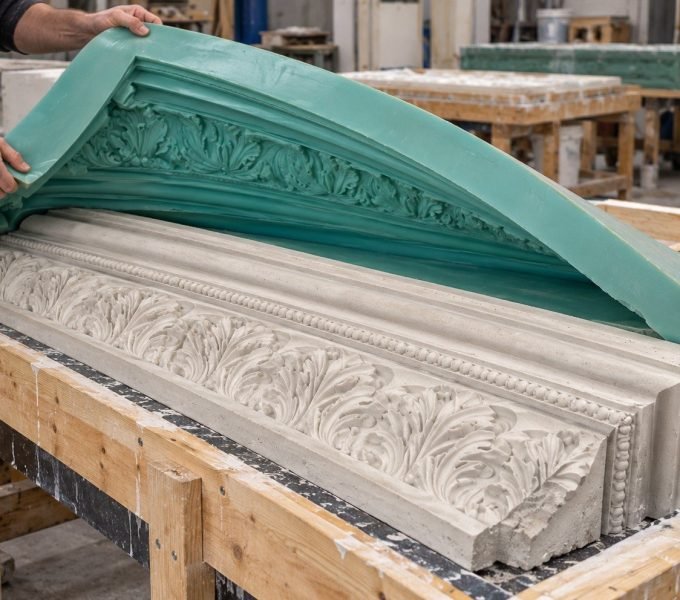
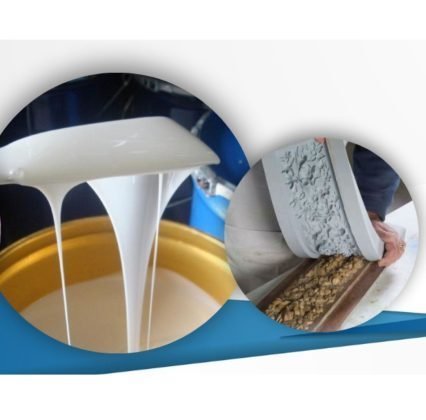
CREKEM tin-cure and platinum-cure silicone rubber for plaster casting. Choose pourable or brushable grades around the original ornament, relief depth, mold size and casting schedule.
- Crisp Reproduction of Ornamental Detail
- Gentle Release from Deep Relief and Undercuts
- Stable Shape for Long Cornices and Mouldings
- Consistent Results Across Repeated Castings
MATERIALS
Tin-Cure Silicone / Platinum-Cure Silicone
Compare chemistry by process
METHOD
Pourable Silicone / Brushable Silicone
Match the mold geometry
VALIDATION
Sample / TDS
Confirm before production
SUPPLY
Factory direct
Repeatable bulk support
COMMON PRODUCTION CHALLENGES
Where Plaster Workshops Lose Detail and Time
For ornamental plaster makers, damaged cast edges, warped cornice profiles, lost detail, and risks to historic originals can make a mold costly to use. These four issues guide silicone selection and mold design.
01 / Fragile Edges Break
Fragile Cast Edges
Deep relief and thin plaster edges may chip during demolding if the silicone is too stiff or the seam is poorly placed.
02 / Long Profiles Distort
Distorted Cornice Runs
Long plaster mouldings need a straight, stable support shell to keep profiles consistent between casts.
03 / Historic Masters Are Vulnerable
Vulnerable Historic Masters
A porous or damaged original needs careful sealing and compatibility testing before silicone is applied.
04 / Detail Fades in Repeat Runs
Loss of Fine Detail
Air pockets, weak surface contact or mold wear can reduce the clarity of carved ornament in repeated castings.
Common Plaster Mold Projects
Select the silicone system around the original ornament and the casting method.
SCULPTURE & RESTORATION
Replicate Historic Plaster Ornament
Restoration teams may have only one surviving section to reproduce. Assess its fragile or porous surface before molding, then plan seams and support so replacement plaster ornament matches the existing work.
- Statues, figurines, and fine-art editions
- Missing or damaged period ornament
- Bespoke decorative commissions
- Short-run replicas and archival patterns

ARCHITECTURAL ORNAMENT
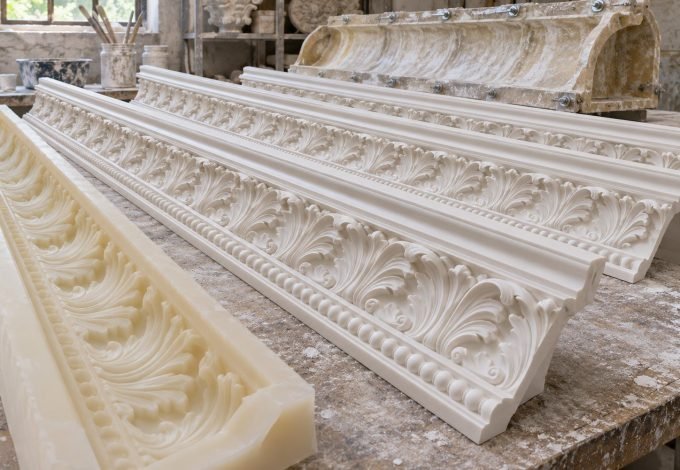
Silicone Molds for Cornices & Ceiling Roses
Long plaster cornices must stay straight across repeated casts. Ceiling roses and deeply carved mouldings need a flexible silicone mold that releases delicate edges without chipping the plaster.
- Cornices, friezes, and panel mouldings
- Ceiling roses, coffers, and medallions
- Columns, capitals, corbels, and arches
- Fireplace details, niches, domes, and trims
BRUSH-ON MOLD MAKING
Capture Detail on Fixed Plaster Ornament
When an original ceiling or wall ornament cannot be moved, brushable silicone can be applied in controlled layers to capture its relief. Assess and test the original surface first, then plan the parting line and support shell for safe removal
Best suited to: fixed ceiling roses, wall reliefs, and heritage plaster restoration.

Choose the Cure System and Application Method
Start with the original, mold geometry, and casting requirements. Tin-cure and platinum-cure silicone can each be supplied in suitable pourable or brushable grades; the final choice should be verified with a sample.
01 / Tin-Cure / Pourable
Tin-Cure Pourable
A practical RTV-2 choice for enclosed masters and routine plaster casting. Select hardness according to relief and mold size.
02 / Tin-Cure / Brushable
Tin-Cure Brushable
For large, vertical or fixed ornament. Apply a suitable thixotropic grade in layers with a rigid mother mold.
03 / Platinum-Cure / Pourable
Platinum-Cure Pourable
Low shrinkage helps precision plaster reproduction. Test the original and any sealer for cure inhibition.
04 / Platinum-Cure / Brushable
Platinum-Cure Brushable
For larger detailed masters where low shrinkage matters. Confirm brushable formulation, compatibility and support.
PROJECT-SPECIFIC SELECTION
Not Sure Which Route Fits Your Mold?
Share photos and the condition of your original, mold dimensions, relief depth, preferred pourable or brushable method, and expected number of plaster castings. CREKEM will recommend a starting silicone grade for sample testing.
FACTORY & VALIDATION SUPPORT
From Trial Grade to Repeatable Supply
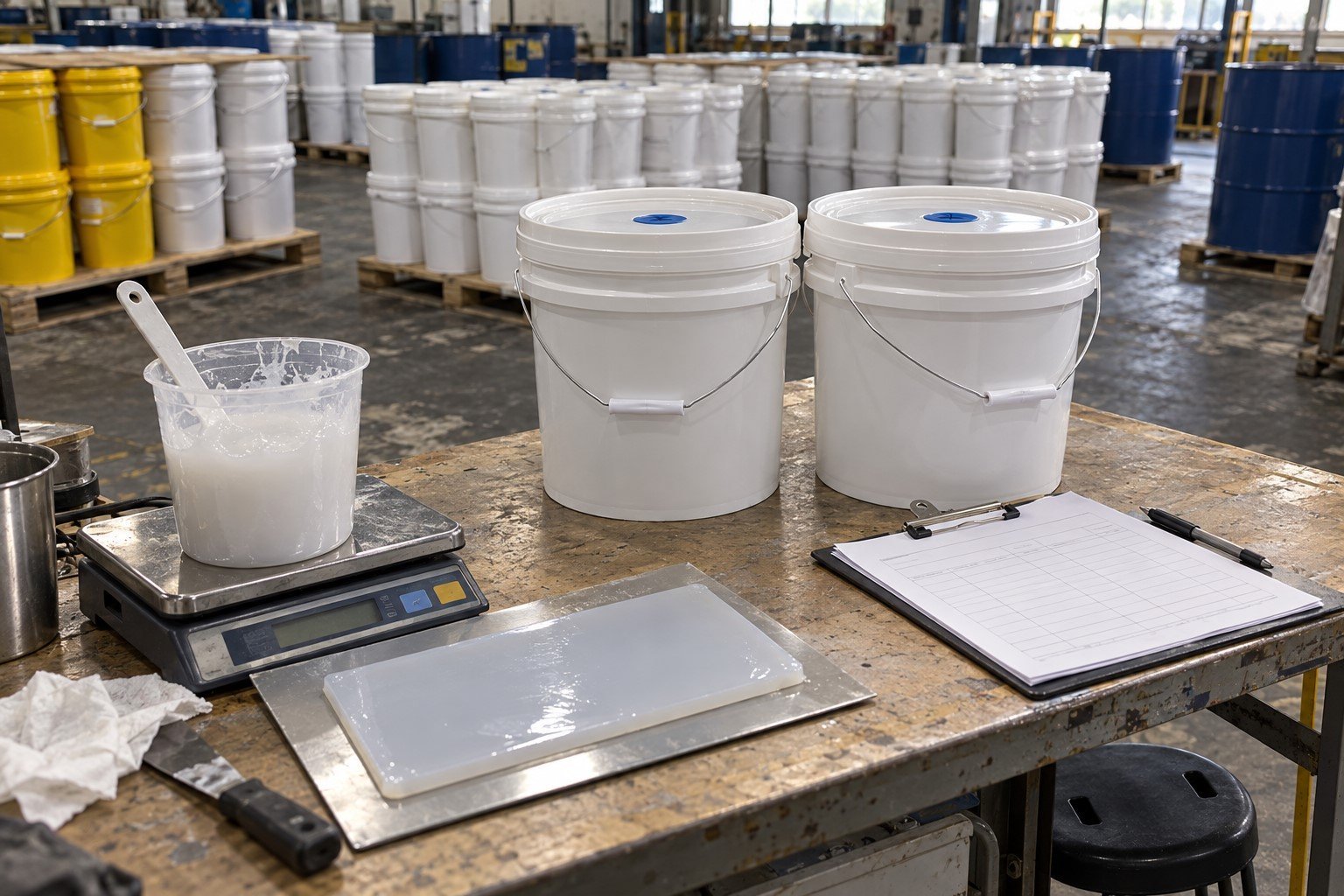
CREKEM supports technical matching before bulk production so the approved material and process can be repeated more reliably.
- Grade direction based on mold and casting conditions
- Sample evaluation before bulk approval
- TDS, SDS, and batch documentation support
- Custom hardness, viscosity, color, and cure-window discussions
- Pourable and thixotropic formulation routes
- Packaging and OEM options subject to project validation
Confirm available packaging, MOQ, lead time, and customization terms with the sales team for the selected grade.
A CRAFT-LED WORKFLOW
From Original to Casting Mold
The master is assessed first; the material decision follows the mold design.
01 — READ THE ORIGINAL
Check porosity, moisture, fragility, relief depth, undercuts, and areas that need sealing or repair.
02 — DESIGN THE MOLD
Plan seams, vents, thickness, registration, demolding direction, and the rigid support shell.
03 — CAPTURE THE SURFACE
Measure and mix accurately, control air, and apply within the available working time.
04 — PROVE THE PROCESS
Allow full cure, make a test casting, and refine handling before repeat production.
WORKSHOP QUESTIONS
Questions from Plaster Workshops
Most early failures reveal a material, mold-design, or processing mismatch.
Check surface wetting, viscosity, entrapped air, contamination, and whether the first silicone layer reached the master completely.
Sharp relief, thin zones, poor seam placement, or insufficient tear strength can concentrate stress during demolding.
The mold may need more body, uniform thickness, better registration, or a straighter and more rigid mother mold.
Verify the mix ratio, mixing quality, temperature, contamination, and possible cure inhibition. Test the master and sealer before production.
Clean gently, keep dry and away from heat or direct sunlight, and support the mold in its natural geometry to prevent distortion.
RELATED RESOURCES
Practical Guides for Better Mold Decisions
Use these guides to prepare the project, choose a starting material direction, and avoid common processing problems before sample testing.
MATERIAL SELECTION
How To Choose Liquid Silicone Rubber?
Compare pouring and brushing methods, then narrow the starting hardness by mold size, geometry, and support needs.
RTV-2 BASICS
What Is RTV2 Silicone Rubber Used For?
Review where two-part room-temperature-curing silicone is used and why it suits detailed concrete and stone reproduction.

PROCESS CONTROL
How to Mix Silicone Rubber Without Bubbles
Use better preparation, mixing, degassing, and pouring practices to reduce trapped air and surface defects.
TALK TO A MATERIAL SPECIALIST
Tell Us About Your Plaster Mold
Tell us whether you are producing cornices, ceiling roses, sculpture, architectural ornament, or restoration pieces. CREKEM will recommend a suitable silicone family, hardness, viscosity, and application approach for testing.