
APPLICATION ENGINEERING · EQUINE CARE
Silicone Hoof Putty Built Around the Farrier Workflow
Two-part platinum silicone formulated as a hand-mixable hoof packing material. Match firmness, working time, cure speed, color, and pack format to real shoeing conditions.
- 1:1 mix for straightforward field preparation
- Support options from soft cushioning to firmer packing
- OEM formulation, color, pack, and label support
START WITH THE USE CONDITION
Send the shoeing setup first
Tell us the pad or boot system, target firmness, climate, available working time, pack size, and annual demand. CREKEM can narrow the grade and sample direction.
THE CUSTOMER PROBLEM
The Putty Must Work Before the Horse Puts Weight Down
Farriers need a material that mixes quickly, stays where it is placed, fills the intended void, and cures predictably within the shoeing window.
Too soft and the packing can compress or migrate. Too firm and it may create concentrated pressure. A slow or inconsistent cure holds up the appointment; poor mixing can leave uncured streaks. The useful formulation is the one that balances handling, support, and the complete pad or boot system.
PAIN POINT 01
Uneven Contact
Gaps beneath a pad or around the frog can reduce the intended support and let the assembly move under load.
PAIN POINT 02
Wrong Firmness
One hardness cannot suit every horse, workload, ground condition, pad volume, or professional protocol.
PAIN POINT 03
Unreliable Field Cure
Cold weather, rushed mixing, contamination, or a short working window can cause streaks, waste, and appointment delays.
WHERE CUSTOMERS USE IT
A Conforming Support Layer for Hoof-Pad Systems
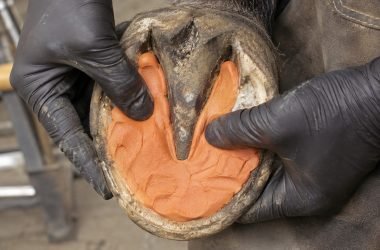
Silicone putty is shaped into the prepared solar surface so it can fill space and create controlled contact beneath a pad or inside a hoof boot.
- Under pads to support the sole and frog
- Inside hoof boots where a custom-conforming cushion is required
- Sensitive or thin-soled feet under professional guidance
- Performance horses exposed to firm or uneven ground
- Corrective and rehabilitation setups specified by a farrier or veterinarian
1:1 Hand Mix
Equal-part dosing by weight or volume simplifies preparation and makes uniform color an immediate mixing check.
2–5 Min Working Window
Options for mixing, placing, and shaping without adding unnecessary delay to the farrier workflow.
10–20 Min Cure Range
Fast-setting support with low shrinkage; confirm the final value against the selected grade and ambient conditions.
MATCH FIRMNESS TO THE JOB
Soft Cushioning Is Not the Same as Firm Support
Select hardness around the hoof condition, horse weight and workload, ground, packing thickness, pad or boot design, and intended duration. CREKEM can develop approximately Shore A 25–68 subject to formulation validation.
EXTRA SOFT
Prioritize Cushioning
For applications where gentle conformity is the priority. Confirm that the material remains stable at the intended packing thickness.
MEDIUM
Balance Feel and Support
A practical starting direction for broad professional use when both resilience and shape retention matter.
FIRM
Increase Structural Support
For setups requiring firmer resistance under load. Professional assessment is essential to avoid concentrated pressure.
FIELD PROCESS
Clean, Mix, Place, Secure
Consistent results depend on preparation and handling as much as the formulation.
01 · PREPARE
Trim and clean the solar surface. Remove loose debris and moisture; confirm the shoe, pad, or boot fit before mixing.
02 · MEASURE & MIX
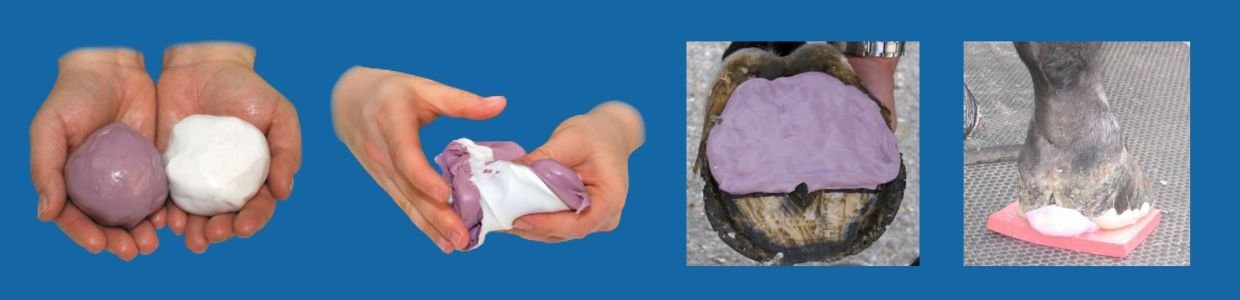
Take equal portions of Parts A and B. Use clean gloves and knead until the color is fully uniform with no streaks.
03 · PLACE & SHAPE
Press into the intended area and control the packing thickness. Avoid trapping contamination or creating unintended pressure ridges.
04 · SECURE & CURE
Fit the pad or boot system and keep the assembly stable until the selected grade is fully cured under the actual ambient conditions.
THE FINISHED ASSEMBLY
Support Must Fit the Complete System
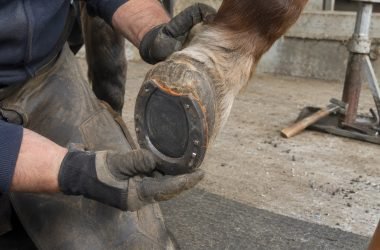
Evaluate the cured packing together with the shoe, pad, boot, hoof geometry, and expected environment. A successful bench sample is only the first step; field evaluation confirms handling and support.
- Check full cure before return to normal work
- Inspect for voids, ridges, or uncontrolled overflow
- Verify that the pad or boot remains seated
- Record ambient temperature and actual working time
- Reassess the horse according to the farrier or veterinarian’s protocol
PRODUCT SPECIFICATIONS
Need Exact Hardness, Working Time, and Cure Data?
Application conditions determine the right grade. Review the current product specifications and customization range on the Silicone Hoof Putty product page, then send CREKEM your pad system and target performance.
FARRIER & BUYER FAQ
Questions That Change the Recommendation
Grade selection should follow the hoof-care setup and the customer’s field conditions—not hardness alone.
Yes. These are common configurations. The volume, firmness, support geometry, pad or boot design, and cure procedure should be selected by the attending hoof-care professional.
A putty that is too soft may compress or migrate; a grade that is too firm may create unwanted pressure. A working time that is too short can cause incomplete placement, while a slow cure can delay the shoeing appointment.
Consider sole sensitivity, horse weight and workload, ground, desired load distribution, packing thickness, available space, and the shoe, pad, or boot system. Always test the intended configuration.
Common causes include inaccurate 1:1 measurement, incomplete mixing, cross-contamination before mixing, or field conditions outside the selected grade’s range. Mix until the color is completely uniform.
Clean and dry the surface, place enough material to fill the intended space, press it into the geometry, and secure the pad consistently. Avoid overfilling or creating pressure ridges.
Yes, subject to formulation, sample, and production validation. Send the target properties, climate, working method, pack size, branding, and estimated demand.
No. It is a hoof-support material, not a diagnosis or standalone treatment. Pain, lameness, laminitis, abscesses, and rehabilitation cases require a qualified farrier and veterinarian.
APPLICATION & OEM SUPPORT
Build the Hoof Putty Around the Customer’s Working Method
CREKEM supports farrier suppliers, hoof-care brands, and distributors with standard grade selection and custom formulation discussions. Start with the field condition rather than a generic hardness request.
SEND THESE DETAILS
What Helps Us Recommend Faster
- Shoe, pad, or hoof-boot configuration
- Current product or target firmness
- Typical working temperature and desired cure window
- Preferred color, pack size, and private-label requirement
- Country, sales channel, and estimated annual demand
Next step: grade direction · sample plan · TDS support