
Home › Applications › Silicone Pad Printing
GENERAL TIN SILICONE FOR SHOE MOLD MAKING
Shoe Mold Making Silicone for Crisp Tread, Clean Release & Fast Sampling
Cast silicone printing pads for curved, recessed and irregular parts. Choose a tin-cure or platinum-cure RTV-2 grade for your pad mold, ink system and press setup.
- For pad makers, consumables distributors and in-house printing teams
- Compare Shore A hardness, pad profile and cure system before a production trial
Ink pickup
Lift artwork from the cliché, including fine text and small logos.
Conformity
Reach the print area on curved, recessed or textured parts.
Image control
Limit distortion by matching pad profile, hardness and stroke.
Trial support
Request a candidate grade, technical data and sample terms.
PAD SELECTION & TROUBLESHOOTING
Where Is Your Print Losing Detail?
Missing ink or pinholes
Inspect the pad face for casting voids. Check that contact rolls across the artwork without trapping air, then check ink pickup from the cliché.
Stretched logos or blurred edges
Check fixture movement and reduce excessive compression. Compare pad profiles and trial a firmer grade if the part and press can take the load.
A pad that cracks or wears early
Look for sharp edges, over-travel or a change in cleaning solvent. Record cycles to the first defect when comparing formulations.
MATERIAL OPTIONS
Tin-Cure vs. Platinum-Cure Pad Printing Silicone
Use your current pad and an approved print as the baseline. Compare two purpose-formulated silicone grades under the same artwork, ink, fixture and machine settings.
Tin-Cure Pad Printing Silicone
A condensation-cure RTV-2 option for cost-sensitive pad casting and replacement pads.
- Trial first when you already have a validated tin-cure process.
- Check shrinkage against your pad drawing and mounting base.
- Confirm mix ratio, working time and demold time in the grade TDS.
Platinum-Cure Pad Printing Silicone
An addition-cure RTV-2 option when low shrinkage and dimensional consistency are important to pad geometry.
- Evaluate for precision pad profiles and repeat builds.
- Screen molds, tools and release agents for cure inhibition.
- Compare ink transfer and pad wear in a production trial.
APPLICATION EXAMPLES
Silicone Pads for Curved and Recessed Parts
Electronics and appliance controls
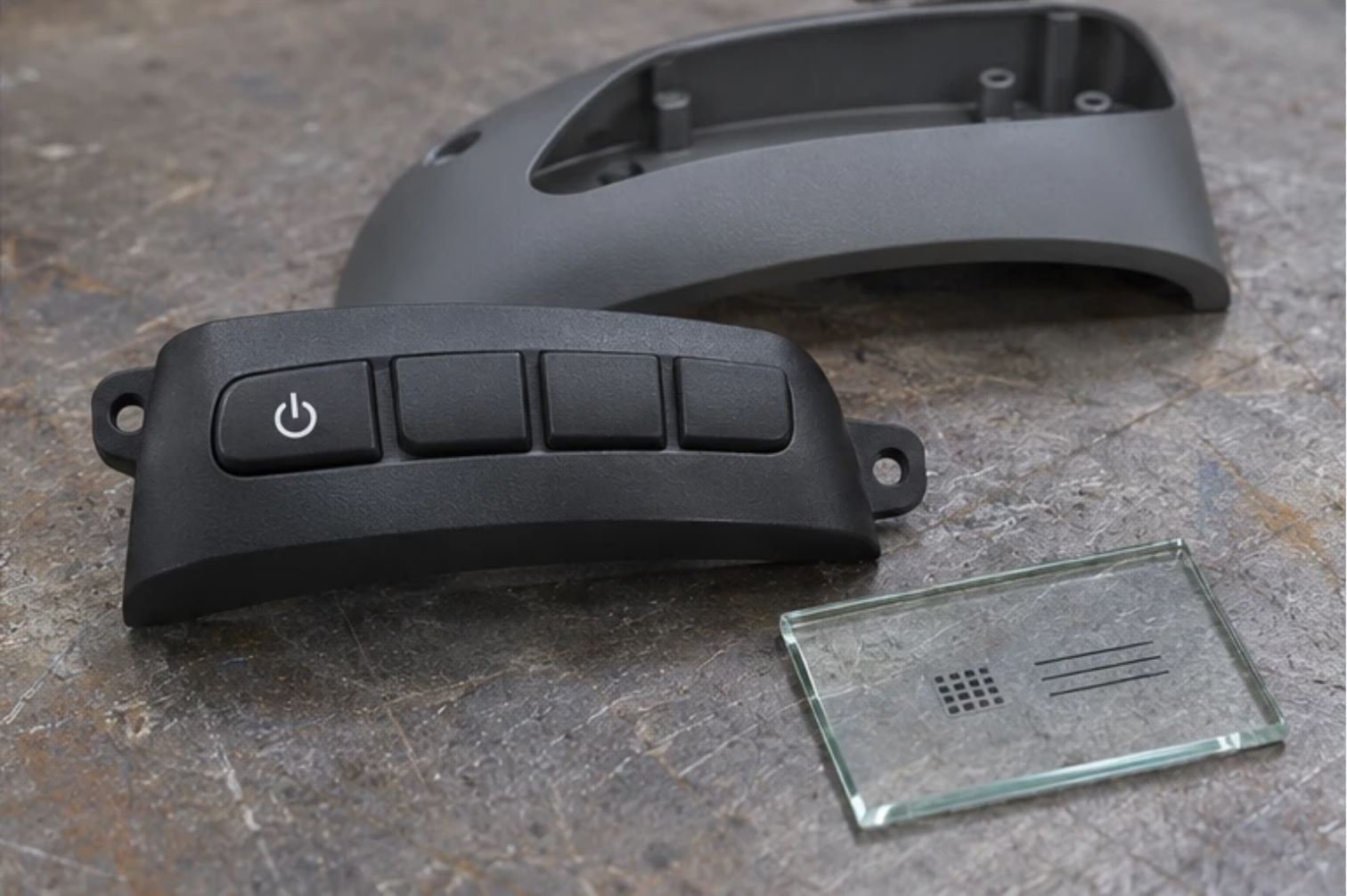
Transfer icons and fine legends onto keycaps, switches or recessed control panels.
Plastic toys and molded housings
Print small logos on curved ABS housings, toys and promotional parts. Check fixture support on thin walls.
Glass, ceramics and coated metal
Apply marks to bottles, components and finished surfaces. Confirm adhesion with the ink system for each substrate.
PAD CASTING & VALIDATION
From Pad Mold to Press Trial
- Define the print area. Record artwork size, surface contours, clearance and press force. Choose a pad profile that rolls across the image.
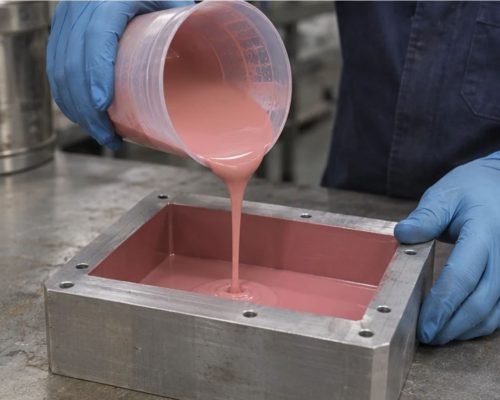
- Cast a trial pad. Weigh and mix per the TDS, degas as specified, pour into clean compatible tooling and cure before demolding.
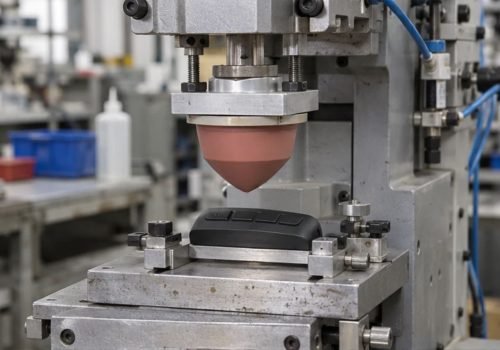
- Test on the pad printing machine. Use production ink, cliché and fixtures. Inspect pickup, image distortion and edge coverage.
- Track the first defect. Record settings, cleaning method and cycles to print deterioration or pad damage before placing a bulk order.
Pad Printing Silicone FAQ
A flexible silicone pad picks up ink from an etched printing plate (cliché) and transfers it onto a part. The pad deforms under compression to reach curved or uneven print areas.
Pad printing silicone is a two-part liquid rubber used to cast the transfer pad. Silicone printing ink is a separate consumable used when the part itself is silicone rubber. Validate the ink, surface preparation and cure schedule with your ink supplier.
Start with the hardness of your current pad if it transfers well. Trial a softer pad for greater conformity or lower machine force, and a firmer pad when the part can take the load and the image needs more control. Compare pads with the same profile and record the test settings.
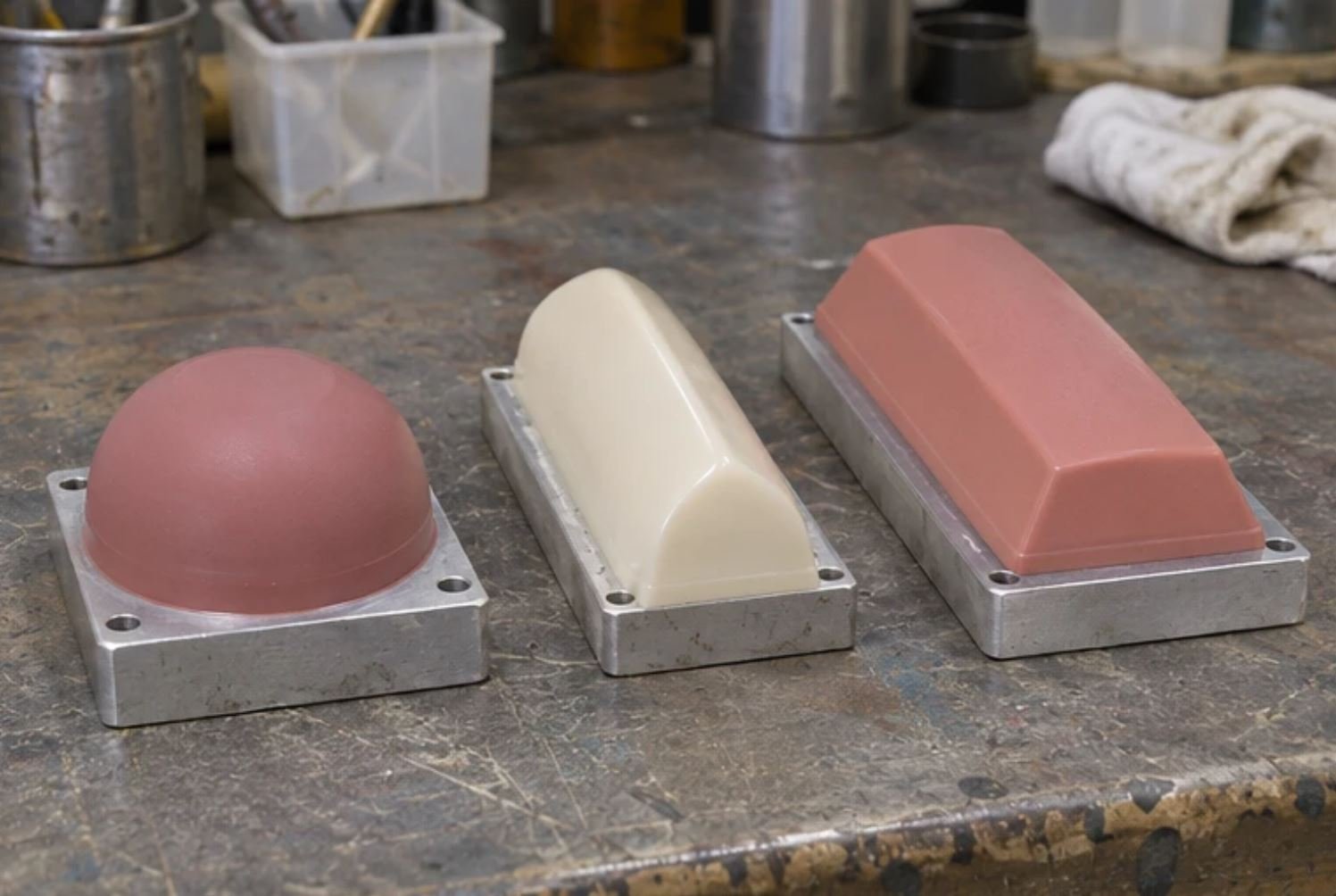
Start with a dome or cone for compact graphics, or a roof profile for long graphics. Check how the contact area rolls outward across the part. Make sure the pad clears adjacent features and covers the image without excessive compression.
Inspect the cast pad face for voids, then check the pad profile, stroke and ink pickup from the cliché. If pickup is complete and the part print is incomplete, check part support, transfer timing and surface condition.
Both systems can be evaluated for production. Compare cure compatibility, hardness, shrinkage and print performance on your own line. Use a small compatibility test before casting platinum-cure material against unfamiliar tooling or release agents.
Send a photo or drawing of your pad and part, print dimensions, ink system, machine and current defect. Include target hardness, trial quantity and estimated monthly demand if available. Ask for the proposed grade, TDS, SDS and trial terms.
REQUEST A MATERIAL RECOMMENDATION
Send Your Pad Drawing or a Photo of the Print Defect
Include the pad profile and dimensions, target Shore A, part material, artwork size, ink system and machine model. Share your sample quantity and estimated bulk demand so CREKEM can recommend a grade and quote the trial.