
Home › Applications › Resin Molds Silicone
Silicone for Resin Molds
Make flexible, detailed silicone molds for epoxy resin casting, decorative pieces, figurines and production parts. CREKEM helps buyers select general tin-cure or translucent platinum-cure liquid silicone for the master, geometry and production target.
- Capture fine textures and clean edges
- Balance easy demolding with tear resistance
- Select a cure system for your budget and workflow
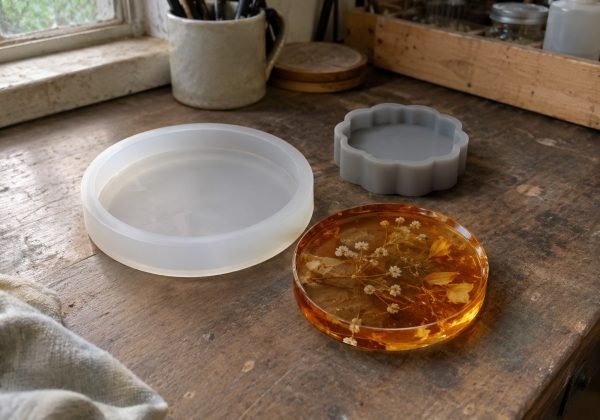
Where Resin Molds Fail—and What to Check
A successful mold must reproduce the master, release the casting and keep its shape through the intended production run. Start with the failure mode that costs your operation the most.
Bubbles and Lost Detail
Air trapped on the master or poor surface wetting can leave pinholes and softened edges. Consider viscosity, degassing and pour orientation.
Tears During Demolding
Deep undercuts and thin sections concentrate stress. Review tear strength, mold design, wall thickness and release technique together.
Short Mold Life
Resin chemistry, heat, cleaning and repeated stretching all affect mold life. Compare cost per usable casting through a production trial.
Silicone for Resin Mold Making: Choose by Application
Match the material to the geometry and process, then verify it on your actual master and casting resin.
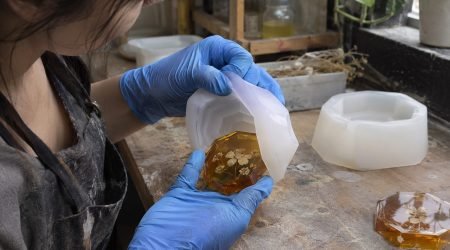
Jewelry & Small Details
Fine lettering and intricate shapes need good surface wetting and careful air management.
Figurines & 3D Shapes
Undercuts and narrow sections call for a balance of flexibility, tear strength and a considered parting line.
Coasters & Decorative Parts
Flat molds need a stable cavity, suitable wall thickness and a finish that reproduces the master.
RESIN MOLD SILICONE SELECTION
Tin-Cure vs. Platinum-Cure Silicone for Resin Molds
Start with general tin-cure silicone for prototypes and cost-sensitive resin molds. Consider translucent platinum silicone when you need to see the master through the mold or keep cure shrinkage low. Test compatibility with your master before making a full mold.
General Tin-Cure Silicone
A practical starting point for everyday resin mold making, prototypes and cost-sensitive production. Discuss flow, hardness and tear strength for your master and target output.
Translucent Platinum Silicone
Consider for detailed molds where translucency helps inspect the master and plan a cut, and where low cure shrinkage is important. Confirm master compatibility before committing to a full mold.
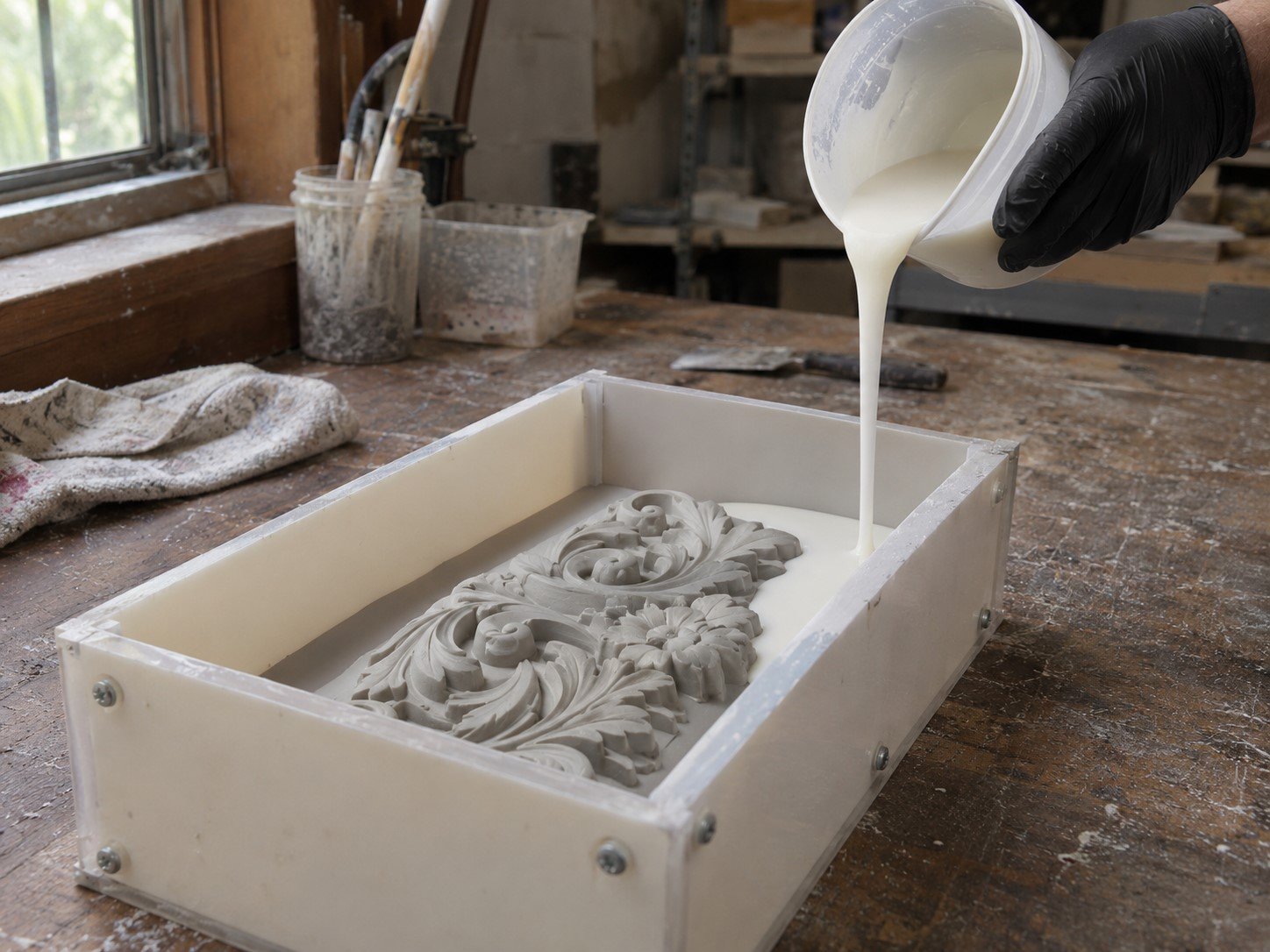
From Master to Repeatable Resin Mold
- Prepare and clean the master; seal porous surfaces where appropriate.
- Test compatibility, especially with 3D prints and platinum silicone.
- Measure and mix according to the selected product’s instructions.
- Degas if needed and pour slowly so air can escape.
- Allow the silicone to cure fully; demold and inspect.
- Cast your actual resin and evaluate finish, release and repeat cycles.
Resin Mold Silicone FAQ
Choose a pourable RTV-2 mold-making silicone based on the master, resin, part geometry and target mold life. General tin silicone is a practical option for routine molds; translucent platinum silicone is worth considering when visibility and dimensional stability matter. Test the proposed grade with your own resin.
General tin-cure silicone can be used to make molds for epoxy resin casting. Resin formulation, exotherm, part geometry and release practices influence mold life, so run a trial with your production system.
Sulfur, tin residues, some amines and incompletely cured 3D-printed masters can inhibit platinum cure. Clean the master and tools, follow the supplier’s preparation instructions, and run a small compatibility test before pouring.
Mix carefully without whipping in excess air. Vacuum degas when appropriate for the grade, then pour a thin stream at a low point and let the material rise around the master. Check that trapped air can escape from fine details.
High casting temperatures, aggressive resin formulations, incomplete cure, surface wear and insufficient release can shorten mold life. Check the resin supplier’s directions, casting thickness and cure temperature; test a compatible release agent if needed.
Soft silicone can help release undercuts; firmer material may provide better support for large or flat cavities. The right Shore A depends on geometry, wall thickness, tear strength and support—not hardness alone.
Yes, but some print resins can inhibit platinum silicone. Fully post-cure and clean the master, use a suitable barrier if recommended, and verify with a small test.
Share your target volume, packaging, working time, cure time and performance requirements. CREKEM can assess available grades and possible customization for your project.
Tell Us About Your Project
- Master material and photos or drawings
- Casting resin type and maximum pour thickness
- Part size, undercuts and desired surface finish
- Target mold life, quantity and delivery destination
- Preferred packaging, cure time and available equipment
Build a Better Resin Mold with CREKEM
Send us your master material, resin type and production target. We will help you identify a suitable silicone system and next steps for sampling.